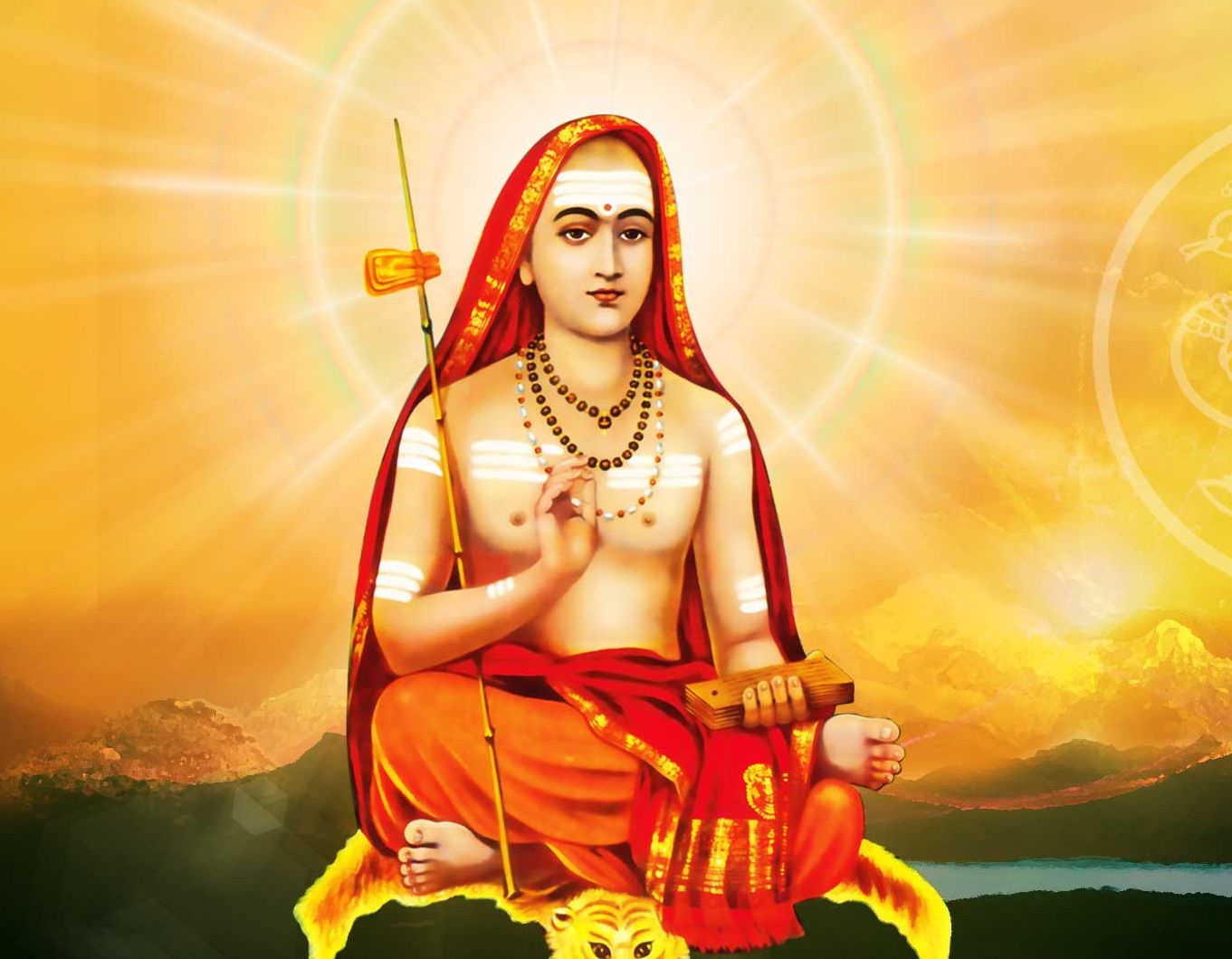
Reflections of the Infinite: Understanding the Self Through Shankara's Wisdom
In the profound words of Adi Shankara, "Like the moon reflected in a thousand pots of water — the Self appears as many." This evocative metaphor invites us to contemplate the nature of the Self and its relationship to the multiplicity of existence. It suggests that while we perceive a multitude of identities and experiences, they are all reflections of a singular, underlying reality. This understanding is crucial, as it challenges our conventional perceptions of individuality and separateness, urging us to explore the deeper unity that binds all beings.
Delving deeper into this quote, we find an invitation to transcend the illusion of duality. The imagery of the moon, a symbol of illumination and consciousness, reflects the idea that our true essence is not confined to the myriad forms we inhabit. Instead, it encourages us to recognize that the essence of the Self is a singular, luminous presence that manifests in diverse ways. This realization can lead to profound shifts in how we relate to ourselves and others, fostering compassion and interconnectedness in a world often marked by division.
The image / the metaphor
The metaphor of the moon reflected in a thousand pots of water is rich with imagery and meaning. The moon, representing the eternal and unchanging aspect of consciousness, shines brightly, casting its light upon the surface of countless vessels. Each pot, while distinct in shape and size, captures a fragment of the moon's brilliance, illustrating how the same essence can appear in myriad forms. The choice of the word "reflected" is particularly poignant, as it emphasizes that these forms are not the essence itself but mere reflections, transient and subject to change.
Going deeper, we can explore the implications of this metaphor for our understanding of identity. Just as the water in each pot can ripple and distort the image of the moon, our perceptions and experiences can cloud our understanding of the true Self. This distortion leads to the illusion of separateness, where we identify with the reflections rather than the source. By recognizing that these reflections are not separate from the moon, we can begin to dismantle the barriers that keep us from experiencing our interconnectedness with all beings.
In the speaker's tradition
Adi Shankara's teachings are deeply rooted in the Vedantic tradition, which emphasizes the non-dual nature of reality. Central to this philosophy is the concept of Brahman, the ultimate reality that underlies all existence. In this context, the reflections of the moon symbolize the individual souls (atman) that, while appearing distinct, are fundamentally one with Brahman. This understanding aligns with the principle of dharma, which encourages individuals to live in harmony with the universal order, recognizing that our actions and identities are expressions of a singular divine essence.
Moreover, Shankara's insights resonate with the Buddhist concept of sunyata, or emptiness, which suggests that all phenomena are interdependent and lack inherent existence. Just as the moon's reflection is contingent upon the water's surface, our identities are shaped by our relationships and experiences. This interconnectedness is echoed in the teachings of the Upanishads, which articulate the unity of the Self with the cosmos, urging seekers to realize their true nature beyond the illusions of individuality.
Living the teaching
Consider a modern scenario where this teaching can be applied: in a workplace filled with diverse personalities and perspectives. Each colleague may present a different "reflection" of their experiences, shaped by their backgrounds and beliefs. By recognizing that these differences are merely reflections of a shared essence, one can cultivate a sense of empathy and collaboration. Instead of viewing conflicts as personal affronts, we can approach them as opportunities to understand the underlying unity that connects us all, fostering a more harmonious work environment.
In personal relationships, this teaching can be transformative as well. Imagine a moment of conflict with a loved one, where emotions run high and misunderstandings abound. By remembering that each person's reaction is a reflection of their own experiences and perceptions, we can step back from the immediate emotional response and seek to understand the deeper motivations at play. This shift in perspective allows for greater compassion and connection, as we recognize that beneath the surface, we are all navigating the same currents of existence, striving for love and understanding.
A reflection
As we contemplate Shankara's profound insight, we are invited to ask ourselves: In what ways do I identify with the reflections of my experiences, and how might I deepen my understanding of the underlying unity that connects all beings? This question encourages us to explore the layers of our identity and the illusions that may separate us from recognizing our shared essence. By engaging with this inquiry, we can begin to dissolve the boundaries that limit our perception, opening ourselves to a more expansive and compassionate view of life.





Join the BrightStar Community
Stay connected with daily inspiration, event announcements, and community wisdom