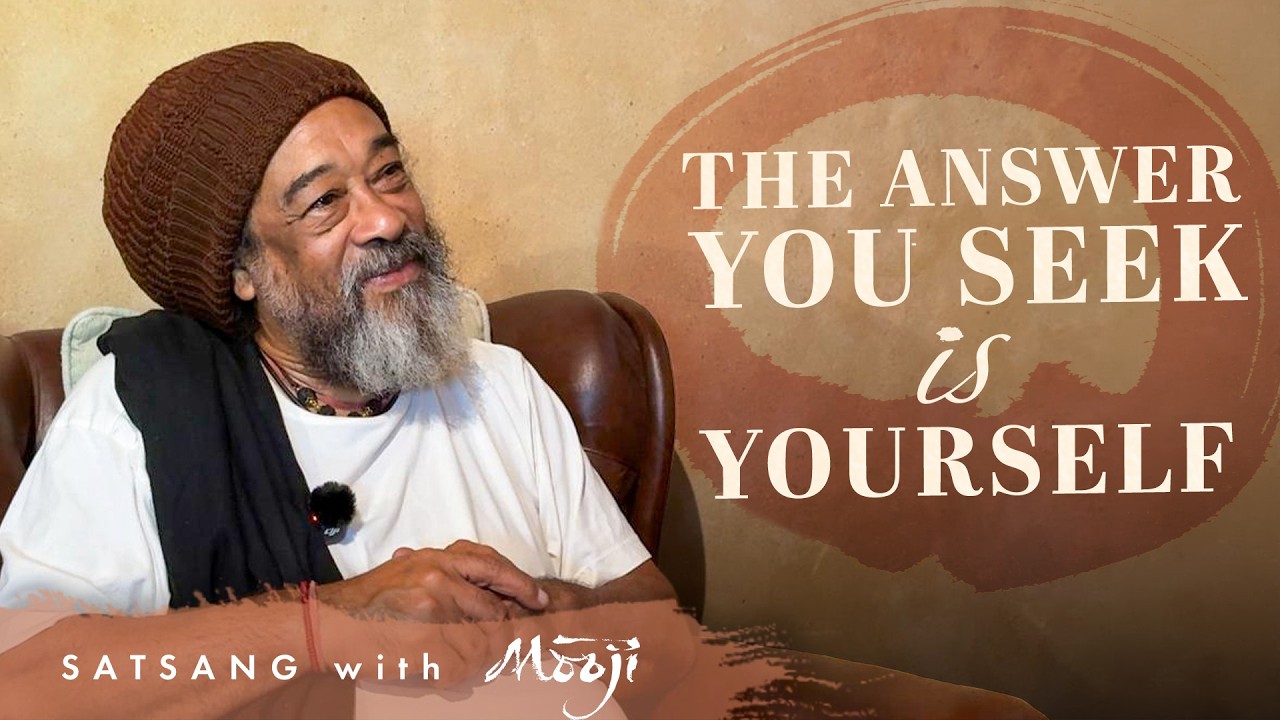
Adyashanti offers a guided meditation practice that points attention toward the quiet inherent in awareness before seeking or attempting to enhance it. The practice teaches how to receive quietness into body, mind, and being, moving beyond conceptual understanding into direct experience. Central to this approach is the recognition that meditation is fundamentally an act of allowing rather than doing—a receptive rather than effortful process that reveals the immensity quietly present within ordinary consciousness.
What Is the "Quiet" Before Seeking?
The foundation of Adyashanti's guided meditation rests on a counterintuitive observation: the quiet you seek in meditation is not something you must create, cultivate, or earn through effort. Rather, it exists already—prior to any attempt to find it or manipulate your experience. This distinction matters profoundly because it reframes meditation from an achievement-based practice into an act of recognition.
Most practitioners approach meditation with the assumption that they must somehow quiet their minds, suppress thoughts, or achieve a special state. This orientation introduces the very tension and effort that obstructs access to natural quietness. By contrast, recognizing that quietness is already present shifts the mediator's stance from doing to noticing, from creating to receiving. The quiet does not require your permission or your practice to exist—it is always already the ground of your awareness. This teaching invites you to investigate what remains when you stop trying to change your experience.
How Does Receptivity Differ From Effort in Meditation?
Adyashanti emphasizes that "in the deepest and truest sense, meditation is not strictly something that we are doing, it is something we are allowing to happen." This distinction between doing and allowing represents a fundamental shift in understanding what meditation actually is. In conventional practice, the meditator often takes an active, controlling stance—managing attention, suppressing distractions, monitoring progress toward some ideal state.
Receptivity, by contrast, involves relaxing that control. It means opening yourself to what is already occurring without trying to direct or shape it. Allowing is not passivity or laziness; rather, it is the cessation of unnecessary effort. When you stop fighting your experience, interfering with your thoughts, or attempting to impose a particular mental state, something deeper becomes available. The body can relax more fully. The mind can settle naturally. Your awareness can open to dimensions of quietness that were present all along but obscured by the effort to reach them.
What Does It Mean to "Receive" Quietness Into Your Being?
Adyashanti invites practitioners to "feel what it's like to receive the quiet into you—into your body, into your mind, and into your soul." This language of reception emphasizes a somatic, embodied dimension of meditation practice often overlooked in purely mental approaches. Quietness is not merely a mental phenomenon; it is something the entire organism can receive and integrate.
To receive quietness into the body means to notice how tension, holding, and bracing gradually dissolve when attention rests in natural silence. Many people carry chronic tension because they are unconsciously trying to control or manage their experience. As the body senses that it is safe to let go, as it discovers that quietness will not abandon it if it stops struggling, physical relaxation deepens naturally.
To receive quietness into the mind means allowing thoughts to move through awareness without resistance or fascination. Rather than trying to stop thoughts or achieve a blank mind, you notice that thoughts arise and pass in a field of relative silence. The quietness persists whether thoughts are present or not; it is the spacious awareness in which all mental activity occurs.
To receive quietness into the soul represents the deepest dimension—an opening of your being to truth, meaning, and presence that exists beyond what the thinking mind can formulate. This involves surrender, a willingness to be known by something larger than the separate self. The quiet immensity is not a possession of the individual; rather, it is an infinite presence into which the individual surrenders its boundaries.
What Is the Role of Concepts and Understanding in Meditation?
Adyashanti explicitly instructs practitioners to "let go of any attempt to understand conceptually." This is not anti-intellectual; rather, it recognizes that certain dimensions of reality cannot be known through thought and must be discovered through direct experience. Concepts—all mental categories, frameworks, and ideas—are tools for naming and organizing experience, but they are not the experience itself.
In meditation, especially when encountering the quiet immensity, conceptual understanding becomes counterproductive. The moment you think about quietness, you have stepped out of direct contact with it. The moment you try to understand what is happening, you have created distance between yourself and the phenomenon itself. Adyashanti's guidance encourages you to release the need to figure out what is occurring and simply be present with what is.
This does not mean becoming anti-intellectual in your daily life. Rather, it means recognizing the appropriate tool for each circumstance. In meditation, in moments of direct encounter with truth, concepts must yield. They can be picked up again afterward to communicate, remember, or reflect. But during practice, the letting-go of conceptual knowing creates space for a non-conceptual knowing—direct insight into how things actually are.
What Is the "Immensity" Found in Stillness?
The title speaks of "quiet immensity"—a paradoxical combination of stillness with vastness. This reflects a subtle but important recognition: the quiet is not a contraction into something small, tight, or limited. Rather, it is a relaxation into something boundless. When you stop the constant outward seeking and internal grasping that characterizes ordinary consciousness, awareness expands.
Many meditators initially experience the quiet as an absence—the absence of noise, distraction, and mental activity. But Adyashanti points toward something more: the quiet is positively immense. It is not an empty negation but a fullness, a presence so vast that it contains all possibility without being defined by any particular content. This immensity cannot be grasped by the individual self because it extends beyond all boundaries and limitations.
The immensity is paradoxical because it is not large in the ordinary sense. It is not a space you could measure or locate. Rather, it is intimate—closer than your own breath, nearer than your own thoughts. Yet it is simultaneously infinite, containing depths that consciousness could never exhaust. This combination of intimacy and infinitude, of stillness and fullness, is what Adyashanti points toward. It is available in any moment of genuine quietness.
How Can You Give Up Holding Onto Things?
Adyashanti instructs practitioners to "give up any attempt to hold onto anything." This pointing addresses a fundamental habit of consciousness: the constant grasping, clinging, and attempt to secure experience. The separate self maintains its sense of identity and continuity partly through holding onto experience—memories, stories, possessions, relationships, identities, and beliefs.
In meditation, as you rest in quiet, the opportunity arises to notice this habitual holding and begin to release it. You might notice that you are holding onto the experience of quiet itself, trying to freeze it, preserve it, or ensure you will have it again. You might notice holding onto the sense of self that experiences, judging whether the experience is "good enough" or comparing it to previous experiences. Adyashanti invites you to give all of this up.
This release is not forced or violent. Rather, it emerges naturally as you recognize that holding onto things is the source of contraction and suffering, while release allows for openness and ease. As you stop holding, the body softens. The mind becomes less anxious. Your being opens. What was held in tension naturally dissolves, and what emerges is not emptiness but a kind of freedom—the freedom of not needing to control, secure, or defend anything.
What Does It Mean to Offer Yourself to the Quiet?
The practice culminates in an act of offering: "offer yourself—all of your attention and all of your heart—to the quiet immensity within you." This is not a gesture of surrender to something external but a turning of your entire being toward what is most intimate and fundamental in your own consciousness.
To offer yourself means to cease the contraction into the separate self and allow your attention and heart to merge with the quiet. It is a gesture of genuine devotion—not devotion to a concept or belief, but direct intimacy with truth. In this offering, the boundary between the meditator and the meditated dissolves. There is only presence recognizing itself.
The offering involves both attention and heart—both the clarity of knowing and the warmth of feeling. Many people try to approach meditation purely mentally, ignoring the heart dimension. But genuine meditation includes the whole being: mind, body, emotions, and the deepest core of consciousness. By offering both attention and heart, you make yourself available to transformation at every level.
Where to Go From Here
This guided meditation serves as an invitation to shift your relationship with practice itself. Rather than approaching meditation as a project to accomplish or a state to achieve, you are invited to discover what is already present. The practice requires only that you point your attention toward the quiet that surrounds and permeates every moment of existence.
Begin by noticing: Is there not already a quiet here, regardless of what thoughts or sensations are occurring? What would it feel like to receive that quiet into your body, allowing tension to soften? What becomes available if you release the attempt to understand and simply rest in direct knowing? Experiment with receptivity instead of effort, with receiving instead of grasping, with offering yourself instead of protecting yourself.
The quiet immensity is not distant or difficult to access. It does not require special circumstances or years of practice. It requires only the simplicity of stopping, the honesty of releasing unnecessary effort, and the willingness to receive what is already present. This meditation points you toward that which has always been the ground of your being.